Why the Genal turns copper
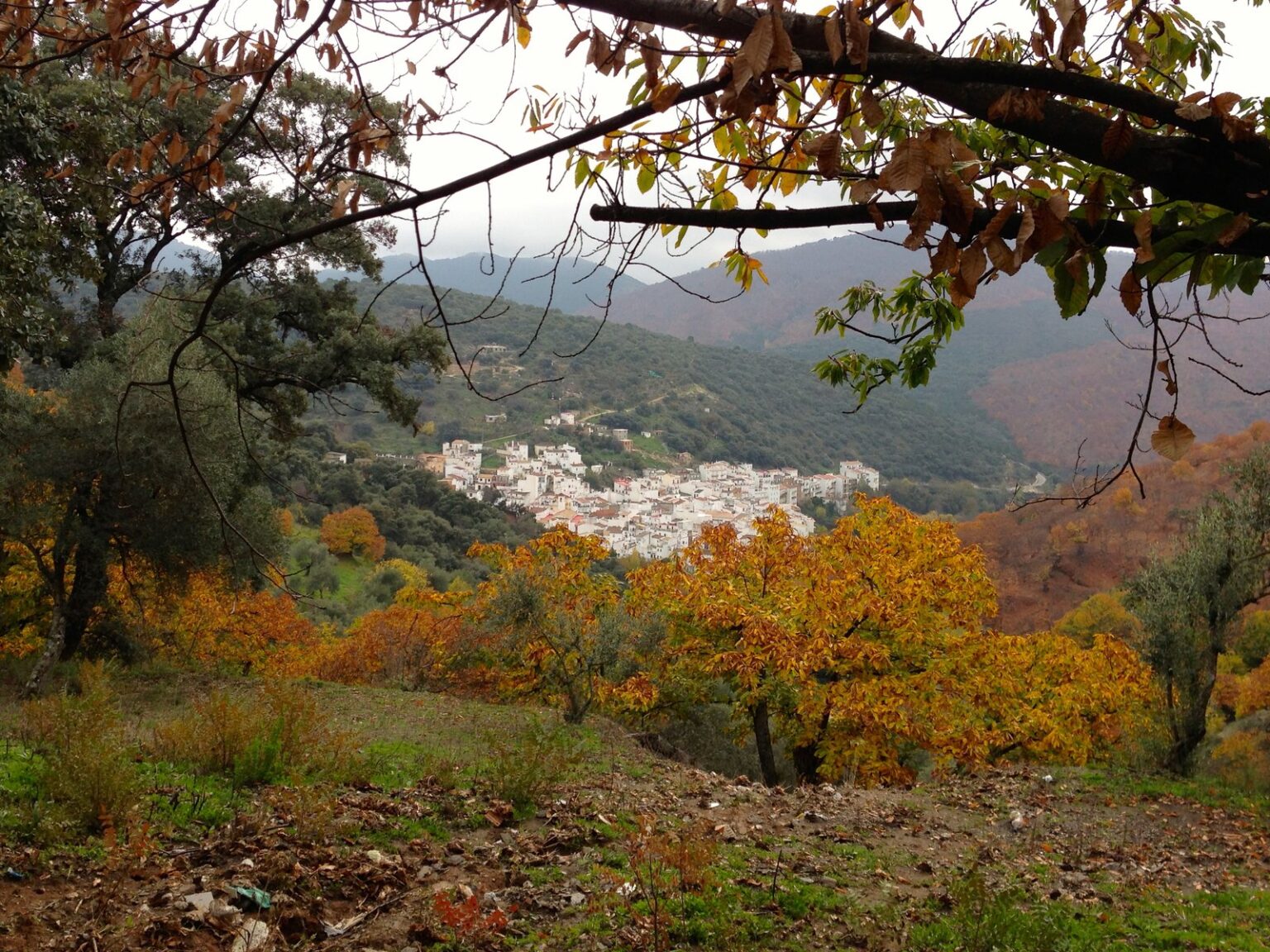
Every autumn the chestnut woods of the Genal Valley, on the southern side of the Serranía de Ronda, turn orange, gold and bronze. The provincial tourism board calls this landscape the Bosque de Cobre, the Copper Forest, and lists the villages that share it: Alpandeire, Benalauría, Cartajima, Faraján, Genalguacil, Igualeja, Jubrique, Júzcar, Parauta and Pujerra, plus Yunquera in the neighbouring Sierra de las Nieves (Visita Costa del Sol).
What looks like wild forest is mostly farmland. Málaga Urbana explains that the copper colour comes from cultivated chestnut groves, usually small family plots of three to five hectares, some with trees 300 to 400 years old. The local cooperative gathers around 1,750,000 kilos of chestnuts in a harvest of about forty days, which is the same window when the valley changes colour.
When to go this year
There is no fixed date, because the colour depends on altitude, rain and the first cold nights. Most local guides point to the last week of October through mid-November. Sabinillas Beach magazine suggests the first ten days of November as the usual peak, with most leaves on the ground by the third week.
For a more data-driven view, bosques.eu tracks the valley with Sentinel-2 satellite images. Its 2026 estimate for the best moment is 13 to 23 November, based on four measured autumns, and in its late-September reading the trees were still green. The higher villages of the upper Genal, such as Parauta, Igualeja and Pujerra, usually turn before the lower valley, so a late-October visit can still find good colour up there.
A loop through Parauta, Igualeja and Pujerra
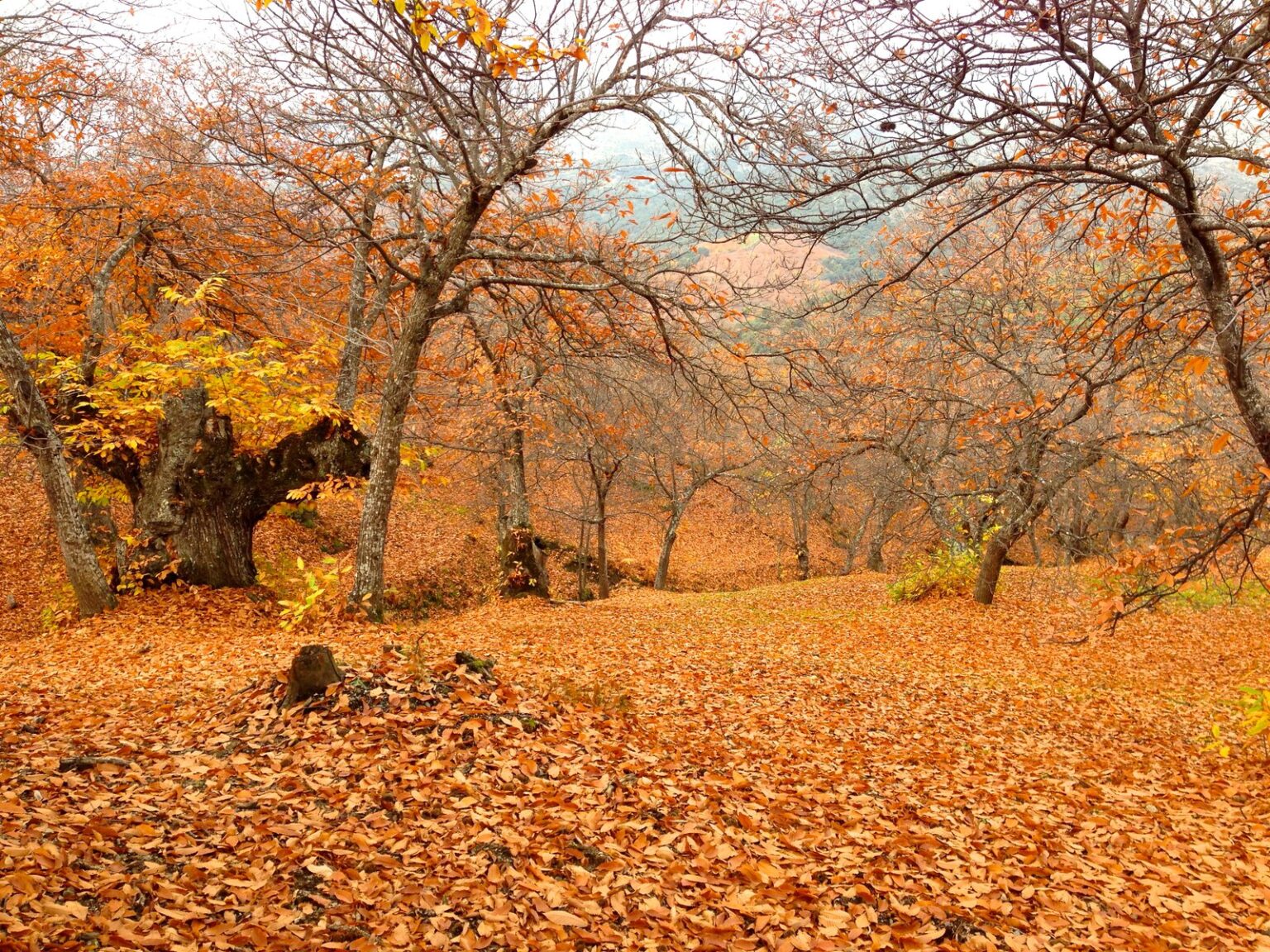
A relaxed day trip links three villages of the upper valley, the route suggested by Malaga.com. Start in Parauta, a small white village on the edge of the Sierra de las Nieves National Park, for coffee and a short walk. Continue to Igualeja, where the river Genal springs from the rock at the edge of the village. The walk down to the source is short and, in autumn, carpeted with leaves.
From Igualeja a narrow road winds through the groves to Pujerra, which sits at about 770 metres, according to the official village guide. Its viewpoints look out over a sea of chestnut trees. On the way back you can return through Júzcar, the village painted blue, before climbing to Ronda.
Please enjoy the woods from the roads, viewpoints and marked paths. The province reminds visitors that the groves are private farms and recommends local trails or the Gran Senda de Ronda (GR 141) for walking among the trees (Diputación de Málaga). The chestnuts on the ground belong to the farmers.
Chestnut festivals and autumn food
Harvest season is also festival season. Pujerra’s Fiesta de la Castaña, organised by the town hall since 2003, is held at the end of October or start of November (Ayuntamiento de Pujerra). In 2025 the 22nd edition ran on Friday 31 October and Saturday 1 November, with roasted chestnuts, live music, the open day at the Chestnut Museum and a tasting of chestnut sweets (2025 programme). The town hall had not published 2026 dates when we checked, so confirm before you plan around it.
Even outside the festival, village bars serve roasted chestnuts, chestnut stews and sweets in season, alongside cured pork from the Serranía. Kitchens in small villages can close early, so aim to sit down for lunch by about 2 pm.
Driving tips for the mountain roads
- Fill up on the coast or in Ronda. Petrol stations in the valley are scarce.
- Expect narrow, winding roads with blind bends, tractors and walkers. Drive slowly and use proper lay-bys to stop for photos, never the bend itself.
- Go midweek if you can. Village parking fills quickly on autumn weekends and festival days.
- Spain’s clocks go back one hour on Sunday 25 October, so evenings get dark earlier. Plan to finish the mountain stretch in daylight.
- Pack layers and a little cash. It is often cooler in the hills than on the coast, and small bars may prefer cash.
By car
From central Málaga, Igualeja is about 104 km and roughly 1 hour 35 minutes by car via the MA-20, the A-7 or AP-7 west to San Pedro de Alcántara, then the A-397 Ronda road (approximate route data from OSRM). The last stretch is slow, so allow closer to two hours. The alternative is inland via the A-357 and A-367 to Ronda, about 102 km.
A loop from Ronda through Parauta, Igualeja and Pujerra is about 34 km and 50 minutes on the A-397, MA-7305, MA-7304 and MA-7300 (approximate OSRM route). Driving up via San Pedro and back via Ronda makes a full circle without repeating a road. If you take the AP-7, check our guide to this autumn’s tolls.